
A Half-Truth Can Be More Dangerous Than a Lie
Why Biblical Discernment Requires More Than Deciding Who You Trust
Jesse Good | Founder & Author, All In Truth
Most deception does not introduce itself by saying, “This is false.”
It usually sounds reasonable. It may quote Scripture. It may come from a respected teacher, a polished website, a viral video, a trusted ministry, a political commentator, or an artificial intelligence tool that answers with complete confidence.
That is what makes discernment difficult.
A statement can contain something true and still lead to a false conclusion. A teacher can be right about one issue and wrong about another. A source can be useful without being trustworthy in everything. And something can feel convincing without actually being biblical.
For Christians, discernment therefore cannot mean simply finding people we trust and accepting whatever they say. Scripture gives us a higher standard.
“Test all things; hold fast what is good” (1 Thessalonians 5:21). The Bereans were commended because they received Paul’s teaching eagerly while still examining the Scriptures to see whether what they were hearing was true (Acts 17:11). John likewise tells believers not to believe every spirit, but to test them (1 John 4:1).
The principle is simple:
Every claim must ultimately be tested against God’s truth.
Truth Is Not Determined by the Messenger
One of the easiest mistakes to make is evaluating a claim primarily by who said it.
If we trust the speaker, we lower our guard. If we distrust the speaker, we may reject everything they say. Neither approach is biblical discernment.
A person can say something true without being right about everything. A flawed church, teacher, movement, or worldview may preserve real truths while mixing them with serious error. Likewise, someone we disagree with may correctly identify a problem even if their explanation or solution is wrong.
Truth does not become false because the wrong person says it. Error does not become true because the right person says it.
That means Christians should resist both blind loyalty and reactionary rejection.
The question is not merely, “Who said this?”
The deeper question is, “Is this true according to God’s Word?”
Scripture Can Be Quoted and Still Misused
Quoting the Bible is not the same as teaching the Bible faithfully.
In Matthew 4, Satan quoted Psalm 91 while tempting Jesus. The words came from Scripture, but they were being used to support something God had not commanded. Jesus answered with Scripture rightly understood and applied.
That should sober us.
A verse can be quoted accurately and still be interpreted badly. A biblical phrase can be separated from its context and made to support an idea the passage never taught.
This is why Christians must do more than ask whether a Bible verse appears somewhere in an argument.
We should ask what the passage means in its immediate context, how it fits within the book, and whether the conclusion agrees with the whole counsel of God (Acts 20:27).
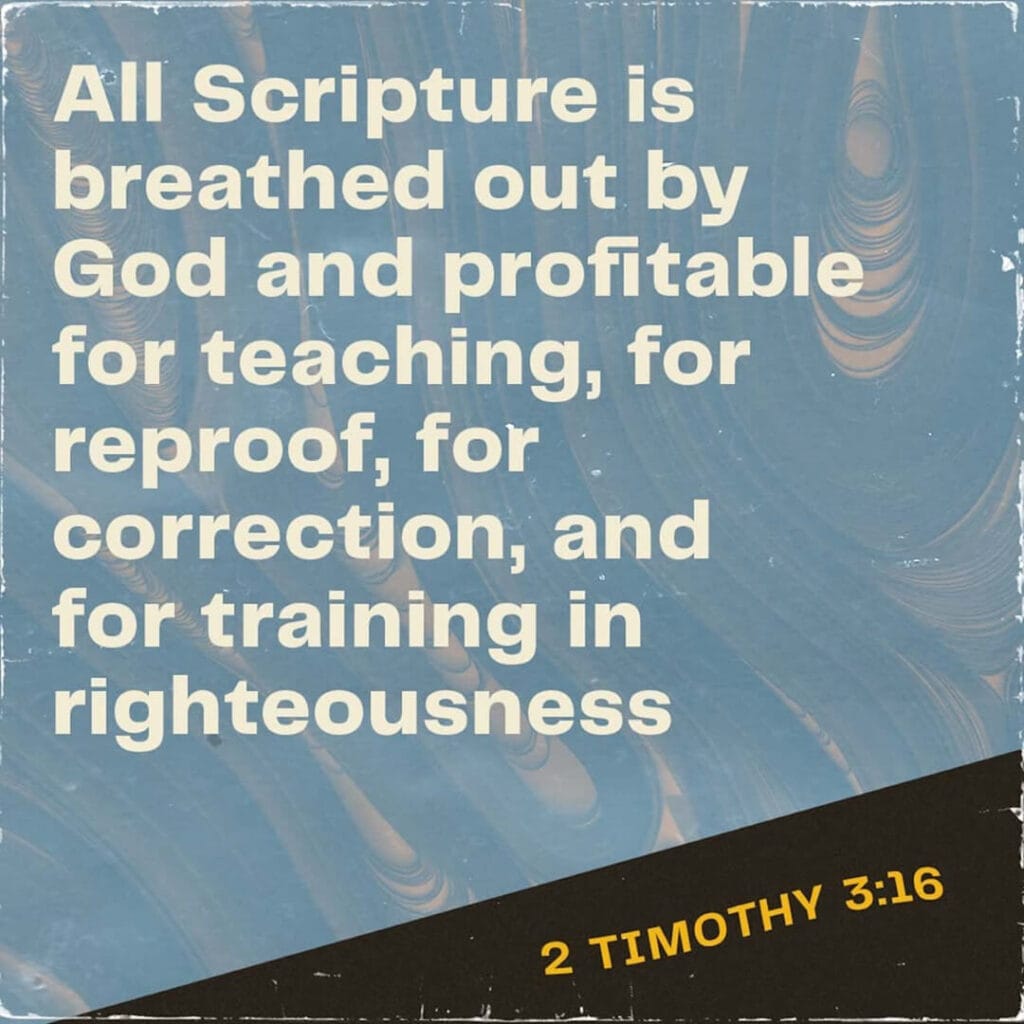
Scripture is not a collection of isolated sentences to support whatever we already want to believe. It is God’s Word, and it must be handled carefully (2 Timothy 2:15; 3:16–17).
The Digital Age Makes Discernment More Important
Today, anyone can publish. Short videos can remove context. Algorithms can repeatedly show us ideas we already agree with. AI tools can summarize complicated subjects in seconds and present uncertain information in polished language.
These tools can be useful. They can help us research, compare ideas, organize information, and discover questions worth studying.
But convenience does not remove responsibility.
No algorithm, influencer, pastor, scholar, ministry, website, or AI system should become a substitute for personally pursuing truth. Christians are responsible to test what they hear, including teachings that confirm what they already believe.
Discernment is easy to talk about while examining someone else’s beliefs. It becomes much harder when Scripture challenges our own assumptions, traditions, preferences, or past conclusions.
Genuine truth-seeking requires the humility to be corrected.
Biblical Discernment Is Not Cynicism
There is another danger to avoid.
Once people realize how much error exists, they can become suspicious of everyone. Discernment turns into cynicism. Every teacher becomes dangerous. Every disagreement becomes heresy. Every imperfect statement becomes a reason to reject someone entirely.
That is not biblical discernment either.
Biblical discernment is precise.
It seeks to keep what is true and reject what is false. It distinguishes serious error from lesser disagreement. It listens carefully before reaching conclusions. It speaks truth without delighting in controversy.
And it remembers that the goal is not to prove that we are smarter than everyone else.
The goal is faithfulness to Christ.
Paul tells believers to speak the truth in love so that the body grows into maturity in Christ (Ephesians 4:14–15). Truth and love are not enemies. Love does not require us to ignore error, and truth does not give us permission to become proud or harsh.
How to Practice Biblical Discernment
Start with Scripture. Make God’s Word your final authority rather than your feelings, favorite teacher, tradition, or cultural tribe.
Read in context. Do not build major conclusions from isolated verses. Ask what the author was actually communicating and how the passage fits with the rest of Scripture.
Follow the whole argument. A teaching may begin with a true premise and end with an unbiblical conclusion. Do not stop evaluating simply because the opening statement was correct.
Be willing to examine yourself. Ask not only, “Where are they wrong?” but also, “Could I be wrong?” Truth-seeking requires humility.
Consider the fruit. Jesus warned about false prophets and said they would be known by their fruits (Matthew 7:15–20). Doctrine matters, and what people believe eventually shapes how they live.
Keep Christ at the center. Christian discernment is not merely an intellectual exercise. It is part of faithfully following Jesus.
Hold Fast to What Is True
In a world overflowing with voices, Christians do not need less discernment. We need more of it.
But the answer is not fear. It is not retreating from every difficult question. And it is not finding one human authority to think for us.
The answer is to become people who love truth enough to test what we hear, humble ourselves if corrected, handle Scripture carefully, and obey what God has actually said.
Jesus is the truth (John 14:6), and God’s Word is truth (John 17:17).
So test everything.
Hold fast to what is good.
Reject what is false.
And follow Jesus faithfully.
As always, we would love to hear from you. If you have any comments or questions, email us at allintruthtv@gmail.com or submit our contact form.
Resources
Check out our Resources page for more evidence, apologetics & evangelism videos, gospel tracts, print & audio Bibles, Christian music, and more.